Southside Script: A Vintage Font for Modern Creative Projects
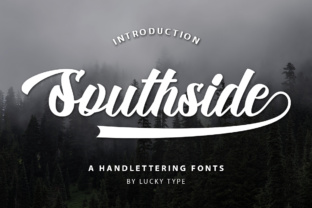
There’s a certain warmth in handwritten lettering that digital typefaces often struggle to capture. Southside Script bridges that gap beautifully, offering a vintage, feminine font with an irregular baseline that feels authentically crafted rather than mechanically generated. This isn’t just another script font—it’s a design asset with personality, one that brings a human touch to everything from wedding invitations to brand logos.
What makes Southside Script stand out in a crowded market of premium fonts is its distinct character. The irregular baseline isn’t a flaw; it’s a feature that mimics the natural flow of hand-lettered calligraphy. Each letterform has subtle variations in weight and angle, giving text an organic, lived-in quality. The overall aesthetic leans feminine without being overly delicate—think elegant but approachable, vintage but not outdated. It strikes a balance that works across generations and design contexts.
Where Southside Script Truly Shines
This creative font finds its sweet spot in projects where warmth, personality, and a touch of nostalgia are welcome. Wedding stationery is an obvious fit—Southside Script brings an intimate, handcrafted feel to save-the-dates, ceremony programs, and thank you cards. But its applications extend far beyond nuptials. Small business owners find it invaluable for logo design, especially for brands in the lifestyle, boutique, artisan, or wellness spaces. The font communicates care, attention to detail, and a personal brand identity that resonates with customers seeking authenticity.
For content creators and marketers, Southside Script works exceptionally well in social media graphics, quote cards, and promotional materials. Its visual personality grabs attention in fast-scrolling feeds while maintaining readability at various sizes. Bloggers and publishers can use it for pull quotes, chapter headings, or feature titles in editorial design layouts. In packaging design, it adds a premium, artisanal quality to product labels—think specialty foods, handmade cosmetics, or boutique candles.
Even in digital spaces, this script font holds its own. Web designers can leverage it for hero sections, call-to-action buttons, or accent text where a human touch is needed. The key is understanding its strengths: Southside Script excels as a display font, drawing the eye and setting a mood, rather than serving as body copy. Pair it thoughtfully with a clean serif font or a straightforward sans serif font, and you create a visual hierarchy that feels both polished and approachable.
Choosing and Using Southside Script Wisely
Not every project calls for a handwritten font, and part of effective design is knowing when a typeface fits and when it doesn’t. Southside Script thrives in contexts where emotion, personality, and storytelling matter. It’s less suited for highly technical, corporate, or data-heavy materials where clarity and neutrality are paramount. Before committing, ask yourself: does this project benefit from a warm, human voice? If yes, this font is worth exploring.
When testing font pairings, consider the visual weight and x-height of Southside Script. A sturdy serif font like a transitional or modern serif can ground its whimsy, while a geometric sans serif font offers clean contrast. Avoid pairing it with other script fonts or overly decorative typefaces—too much personality in a single layout becomes visually noisy. Instead, let Southside Script be the star and use supporting typefaces to handle secondary information.
Readability deserves careful attention. The irregular baseline that gives this font its charm can reduce legibility at very small sizes or in dense paragraphs. Reserve it for headlines, short phrases, and accent text rather than long-form reading. Always test your designs at the intended viewing size and on multiple devices if the project is digital. For print, check proofs under different lighting conditions to ensure the letterforms hold up.
Licensing is another practical consideration. Southside Script is a commercial font, meaning you’ll need to review the license terms before using it in client work, products for sale, or large-scale distribution. Most premium font licenses cover a range of uses—personal projects, commercial work, digital and print—but specifics vary. If you’re a designer working with multiple clients, confirm that the license supports that scope. If you’re a small business owner creating your own brand materials, a standard commercial license typically suffices.
Building a Brand Identity with Character
A typeface is more than a collection of letters—it’s a voice. Southside Script communicates warmth, craftsmanship, and a certain nostalgic elegance that modern typography sometimes overlooks. For entrepreneurs and brand strategists, this makes it a powerful tool in building a recognizable brand identity. When used consistently across touchpoints—business cards, website headers, packaging, social media—it creates a cohesive visual language that audiences begin to associate with your brand’s values and personality.
The font pairs particularly well with muted color palettes, textured backgrounds, and natural materials. Think linen paper, kraft packaging, or soft watercolor washes. In digital applications, consider using it against clean, minimal layouts where its character can breathe without competition. The contrast between the organic letterforms and a structured grid creates visual interest that feels intentional and refined.
For crafters and hobbyists, Southside Script offers endless creative possibilities. Custom quote prints, personalized gifts, handmade greeting cards, and DIY projects all benefit from its handcrafted aesthetic. It’s the kind of font that makes a project feel special—like someone took the time to hand-letter it, even when they didn’t. That perception of care and effort is valuable, whether you’re selling a product or giving a gift.
Ultimately, the best way to evaluate any font is to see it in action. Experiment with Southside Script in a few different contexts before committing to a major project. Set your brand name, a tagline, or a sample headline. Adjust the size, try different pairings, and test it in both color and monochrome. Pay attention to how it makes you feel—and how it might make your audience feel. Good design is intuitive, and the right typeface often speaks for itself long before you articulate why it works.